TokyoCatch Claw Machine
- 3.1
- Rating
- 500.00K
- Installs
- Free
- Price

 Analysis by App-foxy
I went into TokyoCatch expecting a quick arcade distraction and found something more unusual than a standard mobile game. It puts the familiar crane-machine idea on a phone, with the added possibility of winning real prizes. That combination gives the first few sessions a strong sense of curiosity: I was not simply trying to beat a score, but learning whether a careful grab could lead to something tangible.
That novelty is also the central question. A crane game can be entertaining for a few minutes, yet the real test is whether it deserves a regular place on my phone after the initial excitement wears off. Developed by ICHIGO Inc., this free arcade game is aimed at Everyone and works on Android devices running version 7.0 or later. Its current version is 3.0.10, and the app has passed 500 thousand installs, so it is clearly more than an obscure experiment.
My overall impression is mixed but fairly clear: TokyoCatch is best treated as an occasional amusement with a prize-oriented twist, not as a dependable daily game. It can be enjoyable when I want a low-commitment challenge, but the recurring value depends heavily on how much I enjoy the crane format itself and how comfortable I am with spending around it.
You May Also Like

 Blood Strike: 2.5 Anniversary
Blood Strike’s Loadouts Turn Every Drop Into a Tactical Gamble
A close look at Blood Strike’s custom loadouts: how fast access to signature weapons reshapes its battle royale rhythm, rewards preparation, and narrows the gap between fights.

 Pandora - Music & Podcasts
Pandora’s Music Is Easy to Start, but Harder to Recover
Pandora’s strength is its low-effort path from a seed to a station. Its weak spot is how much confidence it asks you to place in connection, setup, and quiet recovery.

 8 Ball Pool
 Is Built on Rivalries, Rematches, and Routine
A close look at the rivalries, rematches, shared routines, and unanswered safety questions that turn a quick pool match into a persistent mobile community.

 Samsung Music
’s Quiet Strength Is Playing What You Already Own
Its reach comes less from spectacle than from dependable access to a personal library. That simplicity is both the app’s strongest retention engine and its ceiling.

 AccuWeather: Weather Radar
AccuWeather Review: A Quick, Clear Forecast for Everyday Decisions
For everyday plans, the best forecast is the one you can understand quickly. AccuWeather makes rain timing, radar, and local conditions easy to act on, with a few trade-offs.

 Hill Climb Racing
Why Hill Climb Racing Still Turns Crashes Into One More Run
A tiny car, a bumpy hill and one more upgrade: Hill Climb Racing keeps resurfacing because its simple chaos makes every near-miss feel personal.
More From Our News Desk
View All News


Why the first week feels more exciting than a normal arcade game
The opening appeal comes from the physical idea behind the game. Traditional crane machines already create tension through timing, positioning, and the possibility of a near miss. Moving that experience onto a phone makes it easier to try whenever I have a spare moment. I do not need to travel to an arcade or wait for a machine to become available, which makes the first sessions feel unusually convenient.
The prize angle changes how I read every attempt. In a conventional arcade title, a failed move usually costs only time. Here, the possibility of a real reward makes each decision feel more deliberate. I found myself studying the setup before acting instead of tapping immediately. That extra attention is a genuine strength, especially for players who enjoy small physical puzzles rather than fast reflex games.
At the same time, the experience is not as carefree as a score-based arcade game. The store summary presents it as a way to win real prizes, while the in-app purchase range runs from $1.96 to $369.99 per item. That wide range is important context for anyone installing it casually. The free download lowers the barrier to trying the game, but the surrounding purchase structure means I would set a personal limit before getting invested.
My most useful first-week habit was to treat the opening sessions as observation rather than shopping. I would look at how the crane challenge was presented, decide whether the target seemed worth pursuing, and stop when I noticed myself chasing a previous failure. That last point matters more here than in many arcade games: a near win can make a player feel that one more attempt must succeed, even when there is no good reason to believe it will.
The learning curve is about restraint as much as skill
TokyoCatch is more appealing to people who enjoy judging a situation before committing. I liked the small ritual of checking the target, considering the likely movement, and accepting that a promising position might still fail. Players who want constant action may find the pace too measured, while people who enjoy crane machines in physical arcades will understand the attraction quickly.
A practical approach is to choose a session purpose. I might play briefly to see whether the format still feels fun, or I might focus on one target rather than browsing endlessly. Mixing those goals is where the experience becomes less satisfying. Browsing encourages impulse, while a focused attempt gives the game a clearer beginning and end.
Another useful distinction is between enjoying the attempt and wanting the prize. Those are not always the same thing. If the challenge itself is entertaining, a failed result does not automatically ruin the session. If the only acceptable outcome is receiving something, the game can become frustrating very quickly. I would ask myself which of those motivations is stronger before spending anything.
The rating sits at a 3.1 average from around 3.9 thousand ratings, alongside roughly 620 written reviews. I read that as a sign that the concept has clear appeal but does not work equally well for everyone. It is not the kind of rating that makes me recommend an automatic download to every arcade fan. Instead, it supports a more cautious recommendation: try it for the format, then decide whether the prize element adds enjoyment or pressure.
What remains after the novelty fades
After the first week, the main challenge is repetition. The crane concept is focused, and that focus can be refreshing at first. Unlike a large game with many systems to unlock, TokyoCatch asks me to return to essentially the same central kind of decision. That simplicity is convenient, but it also means the app has less room to surprise me once I understand its basic appeal.
For month-to-month use, I would not measure value by how often I open it. I would measure it by whether a short visit still feels intentional. If I can play occasionally, enjoy the tension, and close the app without feeling pushed into another attempt, it has a reasonable role as a casual arcade option. If I start opening it mainly because I have already spent time or money, the value has already weakened.
This is where TokyoCatch differs from the usual alternatives in the arcade category. A score-chasing game gives me a clear personal target and usually lets me improve through repeated practice without tying the session to a physical reward. A conventional puzzle game offers progression, levels, or a campaign structure. TokyoCatch instead centers the emotional swing of a crane attempt and the possibility of a real prize. That makes it more distinctive, but also more dependent on my mood and spending discipline.
I would recommend it more readily to someone who misses visiting Japanese-style arcades than to someone looking for a deep game to master over several months. It can fill the gap between errands, during a quiet evening, or when I want a small challenge that does not require learning a large control system. It is less convincing as a primary game for a long commute or a daily routine where I need steady progression.
A realistic everyday session
Imagine I have ten minutes before leaving home. With TokyoCatch, I can open the app, inspect a target, make a few considered attempts, and stop without needing to remember a storyline or rebuild a strategy. That is a good use case because the game fits a short window and does not demand a long uninterrupted session.
The same scenario can turn negative if I am late and keep playing because the previous attempt looked close. The app is most manageable when I decide the stopping point before beginning. I would also avoid treating a busy or stressful moment as the right time to make purchase decisions. A crane game is designed around anticipation, and tiredness can make that anticipation feel more urgent than it really is.
For a household with children, the Everyone age rating makes the game broadly accessible in content terms, but I would still supervise any purchase activity. The age label does not remove the need for a family rule about spending. A simple agreement to play without buying, or to ask before any transaction, makes the experience easier to keep recreational.
Players also considering the shipping or prize side should think beyond the moment of winning. The attraction is not only the digital attempt; it is the expectation of receiving something afterward. I would therefore decide whether I actually want the available type of reward before investing effort. A prize has less value if I would not choose it outside the excitement of the game.
Maintenance, friction, and the cost of keeping it installed
TokyoCatch has a low technical entry point for Android users because it supports Android 7.0 and newer. The free price also makes installation easy. In my view, the real maintenance burden is not storage or setup; it is attention. The app asks me to keep track of my own limits, my reasons for playing, and whether the experience is still enjoyable.
That is a different kind of upkeep from a normal arcade title. With a score game, I can usually return whenever I want and practice without worrying about the emotional effect of each attempt. Here, I need a clearer personal routine. I would keep sessions short, avoid playing when frustrated, and never increase spending simply to recover the feeling of being close to a win.
The current version, 3.0.10, shows that the app is an actively maintained product rather than a one-time release left untouched. That is reassuring for basic continuity, but an updated version does not by itself guarantee that the long-term experience will suit me. Maintenance from the developer and maintenance of my own habits are separate things.
The purchase range deserves repeated practical attention, not because every player will spend, but because the upper end is substantial. I would disable casual purchasing where possible on my device, or at least require confirmation before transactions. That small barrier is useful because it creates a pause between wanting another attempt and paying for it.
One of the less obvious trade-offs is that convenience can remove the natural stopping cues of a physical arcade. In a real venue, leaving the building ends the session. On a phone, the machine is always nearby, so I have to create the boundary myself. For me, that makes a timer or a fixed session budget more valuable than any in-game technique.
Where fatigue begins
The first source of fatigue is repetition without a strong personal goal. If I am not interested in a particular prize and do not enjoy the crane challenge for its own sake, repeated attempts begin to feel like a loop rather than play. This is the point where a standard arcade game may be better, because a high score or level objective can provide a more measurable reason to continue.
The second is emotional fatigue from near misses. A failed attempt can be funny once or twice, but repeated almost-successes may encourage me to keep going even when the session is no longer pleasant. I consider this a design trade-off rather than a flaw unique to this app: the tension that makes crane games exciting is also what can make them tiring.
The third is uncertainty about personal value. A free app can still become expensive if I treat every attempt as a small exception. I would not recommend TokyoCatch to anyone who is uncomfortable setting a firm spending boundary, especially if the main motivation is to obtain a prize rather than enjoy the game. The safest way to use it is to regard purchases as optional entertainment, never as a route to guaranteed value.
There is also a social limitation. A physical crane machine can be fun to watch with friends, and the shared reaction to a successful grab is part of the arcade atmosphere. A phone version is more solitary unless I actively show it to someone. That does not make it bad, but it means the app may not replace the full social experience of visiting an arcade.
Players looking for a competitive online game, a story, character development, or a deep progression system should skip this one. It is also a poor fit for anyone who dislikes chance, physical-prize mechanics, or the feeling of making repeated attempts at one target. In those cases, a traditional score-based arcade game will offer clearer control over improvement and fewer spending concerns.
My long-term verdict on keeping TokyoCatch installed
TokyoCatch earns a place on my phone only under specific conditions. I would keep it as an occasional arcade diversion if I enjoyed crane machines, had a clear limit on purchases, and could accept a failed attempt without trying to chase it. In that role, the app offers something different from ordinary mobile arcade games: a compact crane experience connected to the possibility of a real prize.
I would not keep it as a daily habit by default. The central activity is narrow, the novelty can fade, and the purchase structure makes self-control part of the experience. That does not erase its appeal, but it does lower its long-term value compared with games that provide sustained progression or skill development without the same financial pressure.
The best way to test it is to begin with a no-spend trial mindset. Play enough to decide whether the crane challenge itself is enjoyable, notice how you feel after a loss, and ask whether you would still open the app if prizes were not involved. If the answer is yes, TokyoCatch may become a pleasant occasional routine. If the answer is no, the novelty is probably doing all the work.
My recommendation is therefore selective rather than enthusiastic. I can see why the game has attracted more than 500 thousand installs, and I appreciate the convenience of bringing this particular arcade format to Android. But the 3.1 average rating also matches my experience: the concept is interesting, yet the long-term fit depends on temperament more than on the download itself.
For a curious arcade fan, it is worth trying because the entry cost is free and the idea is distinct. For someone seeking a reliable everyday game, I would choose a conventional arcade or puzzle alternative instead. TokyoCatch is most successful when it stays a short, controlled amusement—not when it becomes a habit that needs constant maintenance.
ICHIGO Inc. has built a game with a memorable hook, but the hook is not enough on its own to guarantee lasting value. I would install it for the crane-machine experience, set boundaries before the excitement begins, and keep it only if the attempts remain fun after the first-week curiosity has gone.
FAQs for TokyoCatch Claw Machine
01What is TokyoCatch and how does it work?
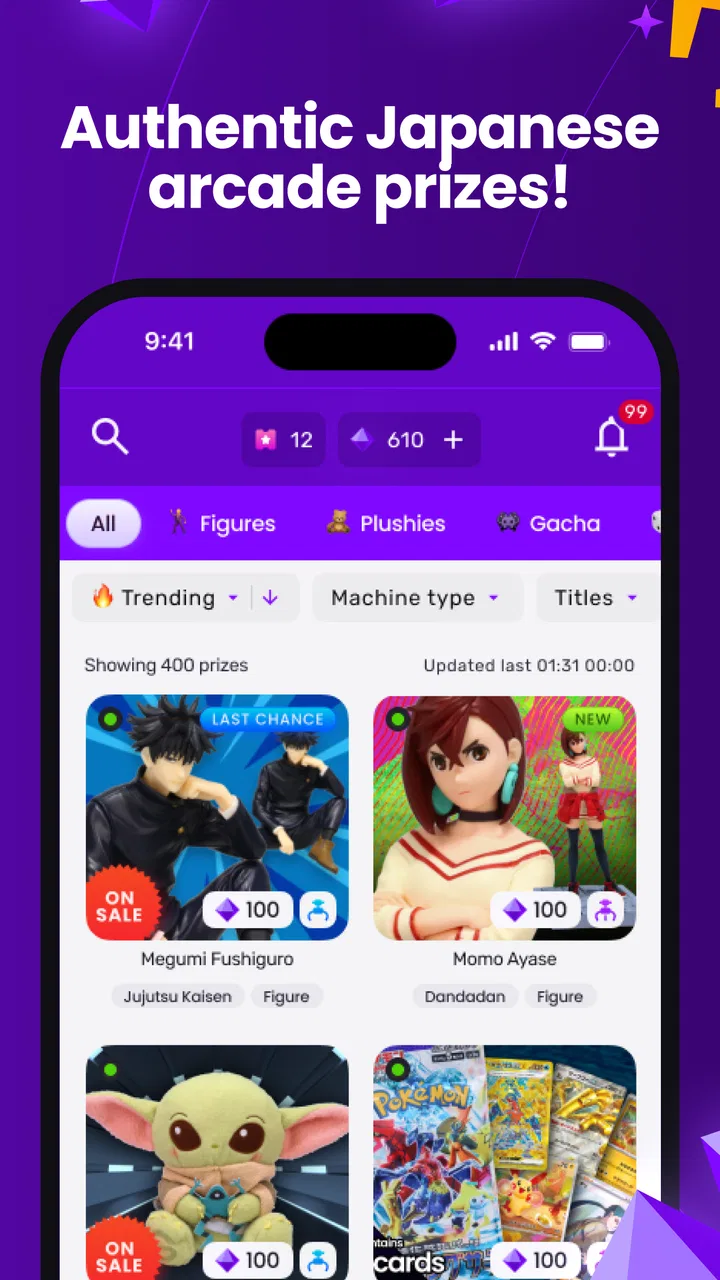
TokyoCatch is a mobile app that lets users play real-time claw games to win authentic prizes from Japan. Once you download the app, you can control a claw machine remotely through your device. Successfully picking up an item allows you to have the prize shipped directly to your address.
02Is TokyoCatch free to download and play?
The TokyoCatch app is free to download on both Android and iOS platforms. While you can explore the app at no cost, playing the claw machines requires purchasing credits through in-app purchases. Occasionally, new users might receive free credits to try out the game.
03What kinds of prizes can I win on TokyoCatch?
TokyoCatch offers a wide variety of prizes, including plush toys, anime figures, and other popular Japanese merchandise. The prizes are updated regularly, ensuring there is always something new and exciting for players to aim for. All prizes are authentic and sourced from Japan.
04How does the shipping process for prizes work?
Once you win a prize, you can request it to be shipped to your address. The shipping process varies depending on your location, and while some promotions might offer free shipping, usually players are responsible for shipping fees. Tracking numbers are provided for all shipped items.
05Are there any tips for winning at TokyoCatch?
Winning at TokyoCatch requires both skill and strategy. It's recommended to watch other players and learn from their attempts. Understanding the timing and positioning of the claw can significantly increase your chances of success. Additionally, practice makes perfect, so consider using free credits wisely to hone your skills.
Pros
- Fun and engaging claw machine gameplay.
- Real prizes shipped to your doorstep.
- User-friendly interface and design.
- Frequent updates with new prizes.
- No in-app ads interrupting gameplay.
Cons
- Requires stable internet connection.
- Prizes may take time to arrive.
- Limited free plays per day.
- Can be addictive for some users.
- Purchases can get expensive quickly.

TokyoCatch Claw Machine
Gallery